
If you are wondering how to calculate goodwill when buying a business, you are not alone. Goodwill is one of the most misunderstood numbers in a small-business deal, yet it appears on almost every acquisition balance sheet. Learning how to calculate goodwill when buying a business helps you understand what you are really paying for, how the price is allocated, and which tax benefits follow the purchase. This guide walks through the formula, a full worked example, and the common traps that trip up first-time buyers.
Most buyers focus on revenue, profit, and multiples, but the purchase agreement almost always separates the price into tangible assets and goodwill. That split matters because how to calculate goodwill when buying a business determines your amortisation schedule, your tax position, and how you value the intangible strengths of the company. By the end of this article, you will be able to run the calculation yourself and negotiate the allocation with confidence instead of guessing.
Goodwill is not a mystical number invented by accountants. It is simply the amount you pay above the fair value of the identifiable assets, and there is a precise way to arrive at it. Once you master how to calculate goodwill when buying a business, you can also use the result to spot overpriced deals, defend your offer, and plan the post-acquisition accounting that follows every closing.
What Is Goodwill When Buying a Business?
The definition of goodwill is straightforward once you separate it from the total price. Goodwill is the excess of the purchase price over the fair market value of the net identifiable assets acquired. When you learn how to calculate goodwill when buying a business, you are really measuring the value of the brand, the customer relationships, the trained workforce, and the operating systems that the seller built over the years.
Businesses are rarely worth only their equipment and inventory. A profitable company carries intangible value that does not appear on the balance sheet, and that intangible value is what the seller is charging for on top of the assets. Understanding how to calculate goodwill when buying a business gives you a precise figure for that intangible value, so you can compare it with the market and decide whether the premium is justified.
The Goodwill Formula in Simple Terms
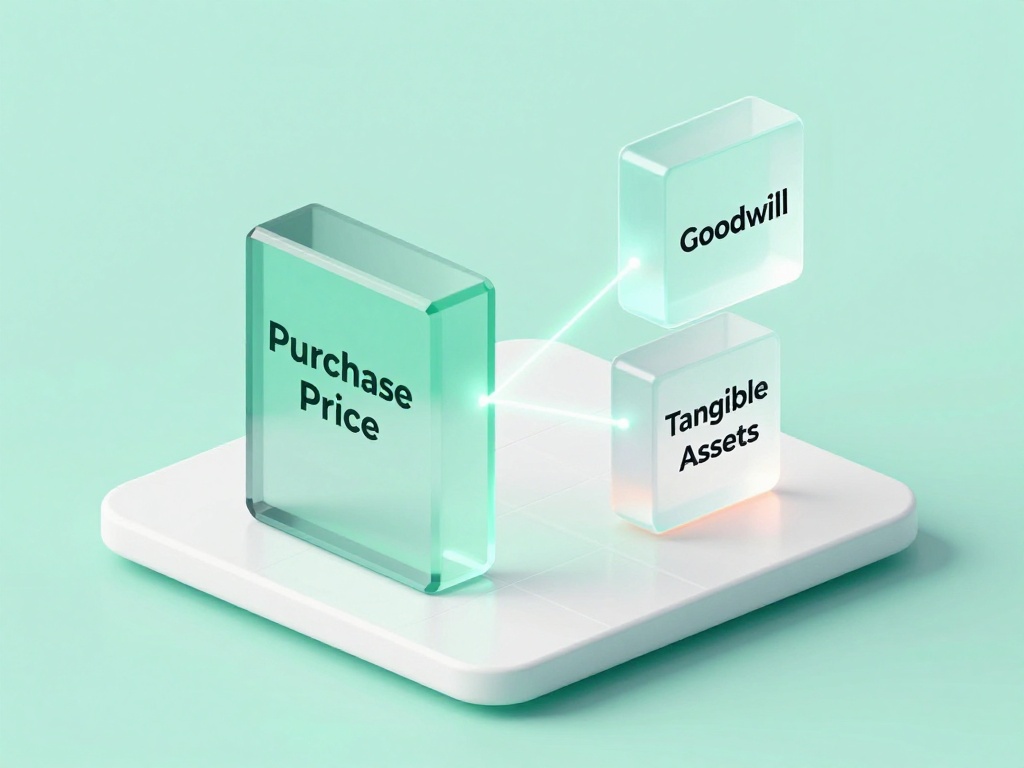
The goodwill formula is shorter than most buyers expect. You take the total purchase price, subtract the fair market value of all acquired assets, and then add back the value of any liabilities you assume as part of the deal. The result is goodwill. Practising how to calculate goodwill when buying a business on paper takes about five minutes, but applying it correctly to a real financial statement takes careful analysis.
A cleaner way to write the formula is that goodwill equals price minus net assets. Net assets are the fair value of everything you own, less everything you owe, at closing. Every time you work out how to calculate goodwill when buying a business, you must use fair market values rather than book values, because book values are often stale and rarely reflect what the assets are really worth on the day of the sale.
Purchase Price vs. Fair Market Value
The purchase price is the number written on the sale agreement, including any seller note or earn-out that has a determinable value. The fair market value is what each asset would sell for between a willing buyer and a willing seller. The gap between those two figures is exactly what you are calculating when you work out how to calculate goodwill when buying a business, so you need an appraisal that sets fair values first.
Identifiable Assets and Liabilities
Identifiable assets include cash, receivables, inventory, equipment, real estate, and contracts, provided they can be separated and sold. Intangibles such as patents and trademarks also count, and their values must be estimated carefully. Before you attempt how to calculate goodwill when buying a business, list every identifiable asset and every liability, then assign a fair value to each line so your net figure is accurate.
How to Calculate Goodwill When Buying a Business, Step by Step
Now we can put the whole process together. To calculate goodwill when buying a business, follow four steps. First, determine the total purchase price including assumed debt. Second, list every identifiable asset and record its fair market value. Third, list every liability assumed and add those to the total. Fourth, subtract net assets from the purchase price, and the remainder is the goodwill figure for the deal.
Each step depends on the one before it, which is why so many buyers make errors. A missing liability or an inflated asset value will change the final answer, sometimes by hundreds of thousands of dollars. That is precisely why knowing how to calculate goodwill when buying a business on your own, rather than trusting a broker’s summary, protects your money throughout the negotiation.
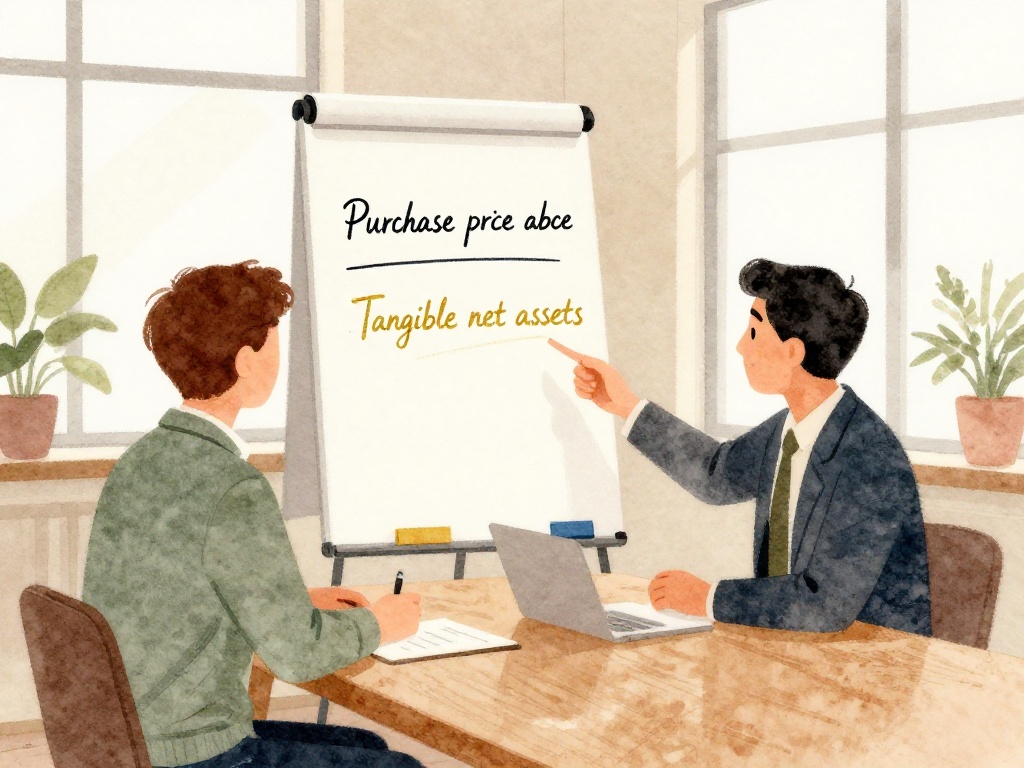
You do not need a specialist to run the numbers, but you do need the right documents. Request the latest balance sheet, an asset appraisal, the lease or ownership records for property, and a schedule of liabilities. With those in hand, you can calculate goodwill when buying a business in a spreadsheet and verify every input before the purchase agreement is signed.
Goodwill Example: A Worked Calculation
A concrete example makes the calculation clear. Suppose you agree to pay 800,000 for a small company. The seller provides an appraisal showing that equipment is worth 200,000, inventory is worth 100,000, and the customer contracts are worth 50,000, giving total identifiable assets of 350,000. The company also has a loan of 50,000 that you will assume as part of the purchase.
Net identifiable assets are 350,000 minus 50,000, which equals 300,000. Your purchase price is 800,000, so goodwill is 800,000 minus 300,000, which equals 500,000. In other words, you are paying 500,000 for the brand, the reputation, and the repeat customers. Walking through how to calculate goodwill when buying a business this way shows exactly how much of the price is tied to assets that will need to be replaced or maintained.
Now apply the same method to a real listing. If a seller asks for 900,000 and the net assets are worth 250,000, the implied goodwill is 650,000, which is a very large premium that should only make sense for a high-margin business with sticky customers. Knowing how to calculate goodwill when buying a business lets you flag that ratio early and question whether the premium is justified before you commit.
Types of Goodwill: Purchased vs. Inherent
There are two main types of goodwill, and the distinction matters for accounting. Purchased goodwill is the amount you record on the books when you buy a company, and it is exactly what you arrive at when you calculate goodwill when buying a business. Inherent goodwill, by contrast, is the internal value a company builds over time through its reputation, and it never appears on the balance sheet because no transaction created it.
Only purchased goodwill can be capitalised and amortised for tax purposes in most jurisdictions. Inherent goodwill is not recognised at all until the business is sold, at which point it converts into purchased goodwill for the new owner. When a seller claims their company has huge inherent value, ask them to demonstrate it, because only the transaction itself creates the goodwill figure you can record.
Why Goodwill Matters for Tax and Amortisation
The way you calculate goodwill when buying a business has direct tax consequences. In the United States, purchased goodwill is treated as a Section 197 intangible and amortised over 15 years on a straight-line basis. That means the 500,000 goodwill figure in our example generates an annual deduction of about 33,333 for the first 15 years, which reduces your taxable income and lowers the real cost of the acquisition.
This is why the allocation of the purchase price matters so much. If too much of the price is assigned to equipment, you get faster depreciation but less goodwill amortisation, and the reverse is true if goodwill is overweighted. When you know how to calculate goodwill when buying a business, you can work with your accountant to structure the allocation in a way that is both legal and tax-efficient.

Common Mistakes When Calculating Goodwill
The most common mistake is using book values instead of fair market values. A machine bought ten years ago may be carried at 5,000 on the books while its current market value is 50,000. If you try to calculate goodwill when buying a business using the book figure, you will overstate goodwill and misjudge the deal, so always insist on a fresh appraisal of the assets.
Forgetting liabilities is the second mistake. Some buyers subtract only the assets and ignore the debts that transfer with the company, which inflates the goodwill number and hides the true cost of the deal. A reliable method is to write out every liability, from bank loans to unpaid supplier invoices, before you attempt to calculate goodwill when buying a business.
A third error is double-counting identifiable intangibles. If the customer list is already included in the asset schedule, you cannot add the same value again into goodwill. The cleaner your asset schedule, the more accurate the formula, which is why experienced acquirers prepare the schedule before they calculate goodwill when buying a business rather than after the price is agreed. Running through how to calculate goodwill when buying a business twice, once with your own numbers and once with the seller’s, is the fastest way to expose double-counting.
Goodwill in the Purchase Price Allocation
Purchase price allocation is the formal exercise of dividing the total price among tangible assets, identifiable intangibles, and goodwill. Buyers complete this allocation on IRS Form 8594 in the United States, and the tax treatment follows the allocation you choose. If you already know how to calculate goodwill when buying a business, you have completed the hardest part of the allocation before you even fill out the form.
The allocation also affects future reporting. When you later sell the business, the tax basis of the goodwill and the other assets determines how much capital gain you recognise. That is a strong reason to keep your documents organised and to record the exact fair values you used when you calculate goodwill when buying a business, because those records become your tax evidence years later.
How Lenders and Appraisers Treat Goodwill
Lenders treat goodwill cautiously because it cannot easily be sold to recover a loan if the business fails. A bank will usually lend more against tangible assets than against the goodwill portion of a purchase price. When you explain to a lender how to calculate goodwill when buying a business, a deal with a small goodwill share looks safer and qualifies for better financing terms.
Appraisers, meanwhile, use goodwill as a check on the overall price. If the implied goodwill is more than about half of the purchase price for a typical small business, they will look for evidence of strong recurring revenue to support it. Your ability to calculate goodwill when buying a business gives you the same analytical lens, so you can judge whether an appraiser’s figure is reasonable.
Goodwill and Seller Financing
Seller financing is common in small-business deals, and it changes how you treat goodwill. When part of the price is paid with a seller note, the note still counts as part of the purchase price, so the full amount goes into the calculation. That means you can work out how to calculate goodwill when buying a business exactly the same way whether the deal is all cash or financed by the seller, as long as the note has a determinable market value.
Earn-outs and performance bonuses add a wrinkle. If the seller receives extra payments only when the business hits certain profit targets, that contingent amount is not part of the initial goodwill calculation. When targets are met, the additional payment is recorded as an adjustment. Keeping your earn-out terms clear makes it much easier to learn how to calculate goodwill when buying a business at closing and to adjust it later without dispute.
Negative Goodwill: When You Pay Less Than Net Assets
Sometimes the purchase price is below the fair value of the net assets, which produces a negative goodwill figure. This usually happens with distressed sellers, forced liquidations, or buyers who negotiate exceptional terms. When you learn how to calculate goodwill when buying a business and arrive at a negative number, the deal is called a bargain purchase, and accounting rules require you to recognise the gain immediately.
Negative goodwill is rare in normal markets, so be suspicious if a seller offers a deal that looks too good. A price below net asset value often signals hidden liabilities, tax problems, or environmental issues that the seller is trying to transfer. Running the formula still helps you, because the moment you know how to calculate goodwill when buying a business and see a negative result, you know to dig much deeper before you sign.
Frequently Asked Questions
Here are the answers to the questions buyers most often ask about how to calculate goodwill when buying a business. Use them to check your own numbers before you close.
💰 Calculate Goodwill Business Purchase FAQ
How to calculate goodwill when buying a business in simple terms?
To calculate goodwill when buying a business, subtract the fair market value of the net identifiable assets from the total purchase price. Net assets are the fair value of all assets minus all assumed liabilities. The remainder is the goodwill.
Why does it matter how to calculate goodwill when buying a business?
The goodwill figure determines your purchase price allocation, your amortisation schedule, and your tax position. Knowing how to calculate goodwill when buying a business also tells you how much of the price is tied to intangible value such as brand and customer relationships.
What is the goodwill formula used by accountants?
Accountants use the same formula you would use: goodwill equals purchase price minus the fair value of net identifiable assets acquired. Goodwill itself is the excess of the price over those net assets.
How long can I amortise goodwill after buying a business?
In the United States, purchased goodwill is amortised over 15 years on a straight-line basis as a Section 197 intangible. The annual deduction reduces your taxable income for a decade and a half after closing.
@type: FAQPage ·
4 questions
📋 JSON‑LD embedded in original block
Final Thoughts on Goodwill Calculation
Mastering how to calculate goodwill when buying a business changes the way you evaluate every deal. Instead of asking whether a price feels high, you can ask how much of the price is goodwill, whether the intangible value is real, and whether the allocation works for your taxes. Those questions turn a vague negotiation into a precise, defensible transaction.
For a broader view of pricing, read our guide on how to value a small business for sale, and use the due diligence checklist for buying a business before you commit. For the official tax rules on purchased intangibles, the IRS website explains Section 197 amortisation in detail.
Conclusion: How to Calculate Goodwill When Buying a Business
You now know how to calculate goodwill when buying a business with a simple formula and a full worked example. The process is always the same: set the purchase price, value the net identifiable assets at fair market value, and subtract the two. What changes between deals is the size of the premium and the quality of the evidence behind it.
Apply the formula to every listing you consider, keep your supporting documents, and confirm the allocation with your accountant before closing. A buyer who can calculate goodwill when buying a business understands the true shape of the deal and avoids paying for value that does not exist. That is the difference between a confident acquirer and an expensive mistake.