
Searching for a restaurant for sale is an exciting step toward ownership, but the food service industry has unique risks that other businesses do not. Restaurants fail at a higher rate than most small businesses, and many of the failures can be traced directly to mistakes made during the buying process. If you are looking at a restaurant for sale, you need a clear-eyed evaluation of the location, the financials, the equipment, and the reason the current owner is selling.
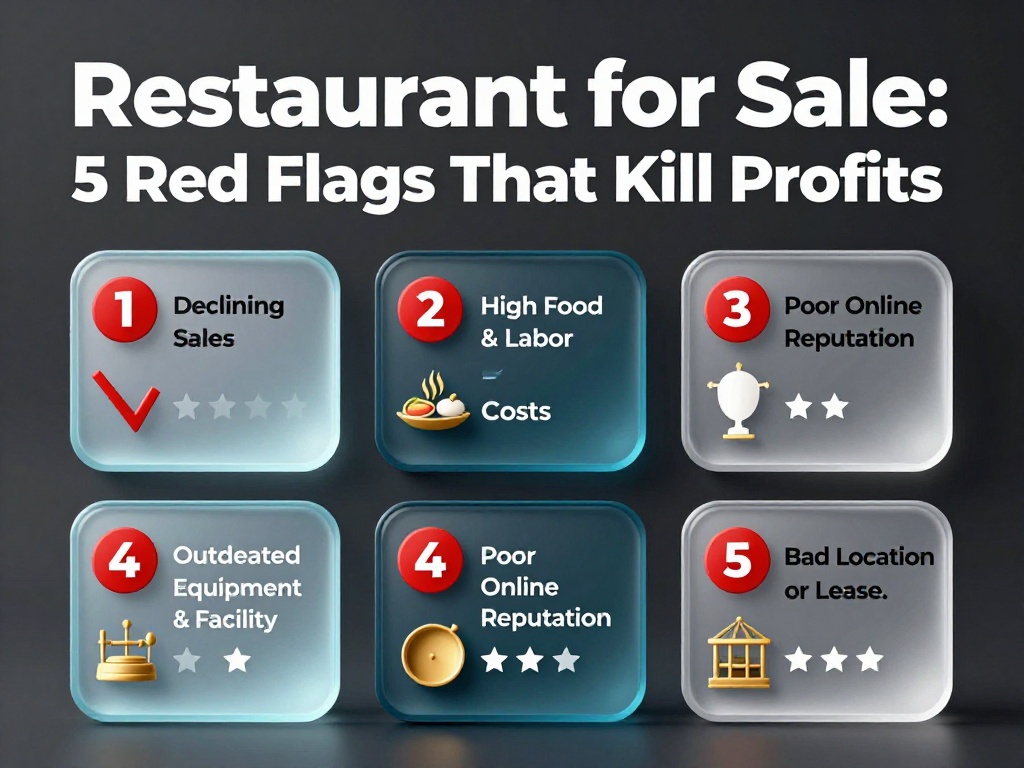
The restaurant industry generates over nine hundred billion dollars in annual sales in the United States, and while that number is massive, the competition is fierce. A well-run restaurant for sale can be an excellent investment with strong cash flow and loyal customers, but a poorly evaluated deal can drain your savings in months. This guide covers the five critical red flags that kill restaurant profits and how to avoid them when evaluating any restaurant for sale.
Whether you are a first-time buyer attracted to the romance of restaurant ownership or an experienced operator looking to expand, understanding what makes a restaurant for sale a good deal versus a financial trap will save you time, money, and heartbreak. The key is knowing what to look for, what to avoid, and how to structure the deal to protect your investment.
Red Flag Number One: Overpriced Restaurant for Sale Listings
Overvaluation is the single biggest risk when evaluating a restaurant for sale. Many owners list their business based on what they hope to get rather than what the business is actually worth. The most common mistake is pricing the restaurant based on gross revenue rather than Seller Discretionary Earnings. A restaurant for sale generating five hundred thousand in revenue but only fifty thousand in profit is not worth the same as a restaurant with two hundred thousand in revenue and the same fifty thousand in profit.
Compare the asking price to industry benchmarks. Most restaurants sell for one point five to three times their annual SDE, depending on the concept, location, and growth potential. If a restaurant for sale is priced at four or five times SDE, the seller is either optimistic or hiding something. Walk away from deals that do not align with market multiples, because overpaying at the start makes it nearly impossible to achieve a positive return on your investment.
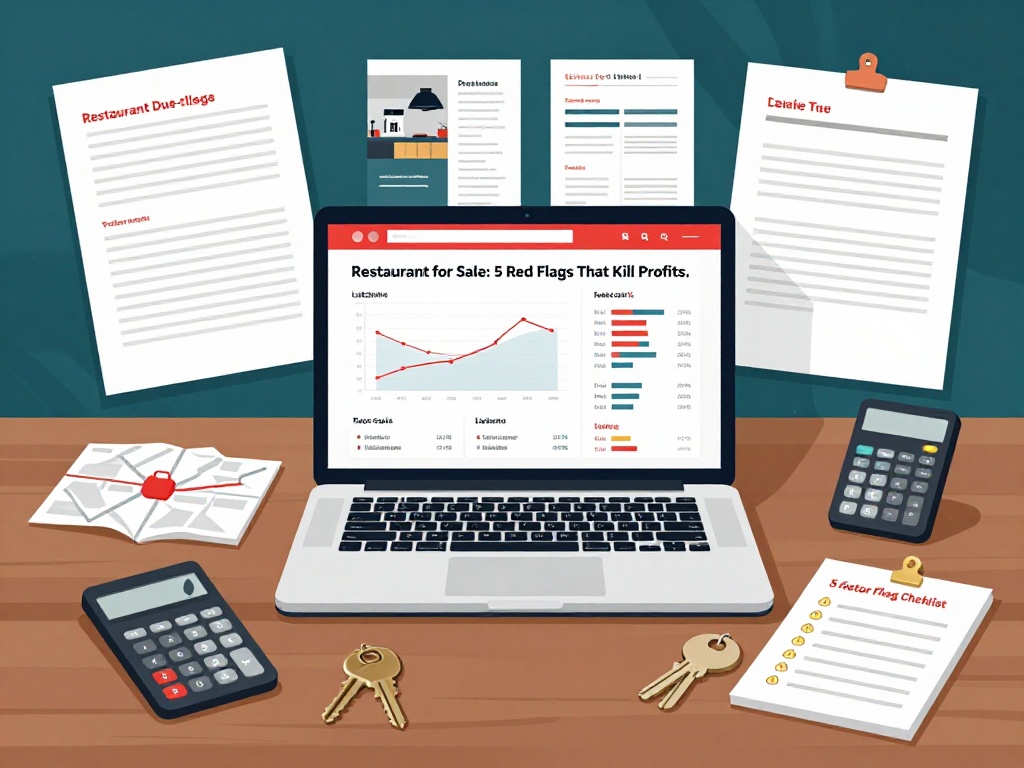
Ask the broker or seller to provide at least three years of financial statements, including tax returns. A restaurant for sale with incomplete or inconsistent financial documentation is a major warning sign. The seller should be able to show you a clear picture of revenue, food costs, labor costs, rent, and net profit for each year of operation. Without this information, you cannot make an informed offer.
Red Flag Number Two: Declining Revenue in a Restaurant for Sale
A restaurant for sale with declining revenue requires careful investigation. Revenue decline can indicate serious problems including increased competition, changing neighborhood demographics, declining food quality, or poor management. While some temporary dips are normal, a consistent downward trend over twelve to twenty-four months suggests structural issues that may not be fixable under new ownership.
Request monthly revenue data for the past two to three years. A restaurant for sale that shows steady revenue in year one, declining revenue in year two, and further decline in year three is a business in trouble. Unless you have a clear plan to reverse the trend and evidence that the decline is caused by correctable factors, this type of restaurant for sale is usually not worth the risk.
Compare the revenue trend to local market conditions. If the surrounding neighborhood is thriving but this particular establishment is declining, the problem is likely internal. If the entire area is experiencing economic decline, the issue may be external and harder to fix. Understanding the root cause of revenue decline is essential before making any offer on a struggling business.
Seasonal patterns can also mask underlying problems. A tourist-area restaurant may look great during peak season but hemorrhage cash during slow months. Request monthly revenue broken down by season so you can evaluate the full-year picture, not just the best months. The most dangerous deals are the ones where the seller shows you the busy months and downplays the quiet ones.
Red Flag Number Three: Deferred Maintenance in a Restaurant for Sale
Deferred maintenance is the silent profit killer in the restaurant industry. A restaurant for sale where the owner has skimped on equipment upkeep, building maintenance, or health code compliance is a business that will require significant capital investment after closing. Kitchen equipment alone can cost hundreds of thousands of dollars to replace, and a restaurant for sale with aging hoods, ovens, refrigeration, and plumbing may need more investment than the purchase price just to bring the facility up to standard.
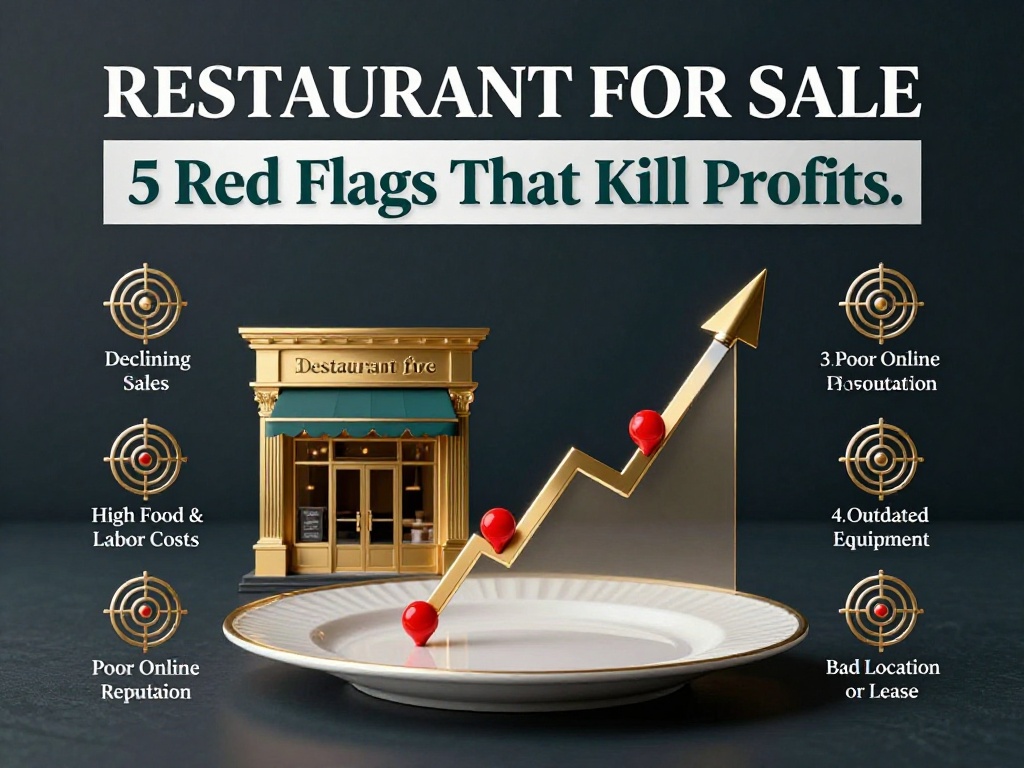
During your walk-through of any restaurant for sale, inspect the grease traps, exhaust hoods, walk-in coolers, and cooking equipment. Ask when each major piece of equipment was last serviced, and request maintenance records. A restaurant for sale with well-documented equipment maintenance is a much safer investment than one where the seller cannot provide records for critical systems.
Health code violations are another form of deferred maintenance that can devastate a restaurant for sale. Request copies of all health inspection reports for the past three years. Restaurants with repeated violations indicate systemic problems with sanitation, food storage, or staff training that will cost money and reputation to fix. A clean inspection history is one of the most valuable attributes of any restaurant for sale.
Red Flag Number Four: Bad Lease Terms on a Restaurant for Sale
The lease is often the most important asset in a restaurant for sale transaction, and it is also the most commonly overlooked. A restaurant with great revenue, loyal customers, and solid equipment is worthless if the lease expires in two years, has a massive rent increase scheduled, or includes restrictive clauses that prevent you from operating the business effectively.
When evaluating a restaurant for sale, request the full lease agreement immediately. Check the remaining term, renewal options, rent escalation clauses, and any exclusive use provisions. A restaurant for sale with at least five years remaining on the lease and reasonable renewal options is significantly more valuable than one with a short or uncertain lease. Landlord approval is almost always required for a lease assignment, so begin that conversation early in the process.
Negotiate directly with the landlord before finalizing your purchase of a restaurant for sale. Many landlords are willing to offer favorable terms to a new tenant who they believe will improve the property and pay rent consistently. A landlord who insists on a steep rent increase or refuses to extend the lease is a serious red flag that may make this particular restaurant for sale unviable regardless of its other strengths.
Red Flag Number Five: High Staff Turnover in a Restaurant for Sale
High employee turnover is one of the most expensive problems in the food service industry, and a deal with chronic staffing issues is a business that will consume your time and energy. The cost of recruiting, hiring, training, and replacing a single worker ranges from three thousand to five thousand dollars, so a business that loses several employees every month is hemorrhaging money that may not appear on the financial statements.
Ask the seller about their current staff retention rate and how long key employees have been with the operation. A business with a stable, experienced kitchen and front-of-house team is worth a premium, because the staff are a critical asset that directly affects food quality, customer service, and operational efficiency. A deal where the manager and head chef are ready to leave at closing is a serious risk that must be factored into your offer price.
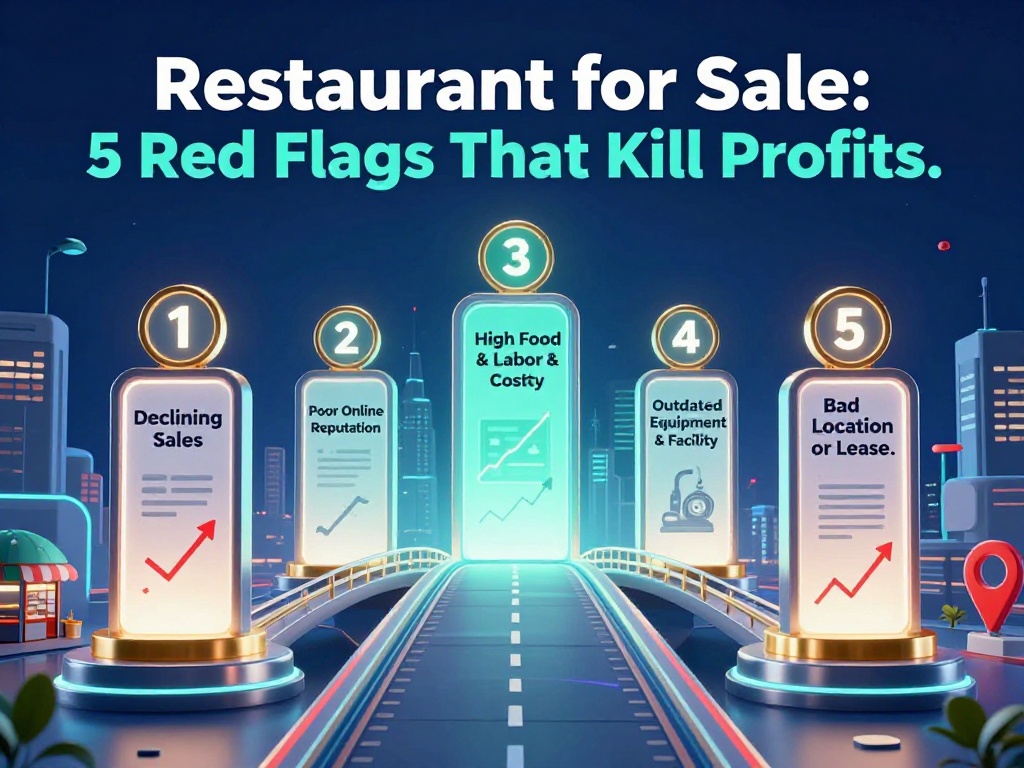
During your visit to the restaurant for sale, observe the staff. Are they engaged and professional, or are they disengaged and unhappy? Do they seem to know each other well, or are there recent hires who appear uncertain? The culture and morale of the team tells you a lot about the management quality and the true state of the business that numbers alone cannot reveal.
How to Properly Value a Restaurant for Sale
Start with the Seller Discretionary Earnings. Add back the owner’s salary, personal expenses run through the business, and any one-time costs to arrive at the true cash flow of the restaurant for sale. This number is the foundation of your valuation and the basis for any multiple-based pricing negotiation.
Apply the appropriate multiple for the restaurant category. Quick-service restaurants typically sell for one point five to two point five times SDE. Full-service restaurants with strong reputations can command two to three times SDE. Specialty concepts like bakeries, food trucks, or catering businesses may fall outside these ranges. Research comparable sales in your market to determine the right multiple for the restaurant for sale you are evaluating.
Factor in the replacement cost of the equipment and leasehold improvements. A restaurant for sale with two hundred thousand dollars in recently upgraded kitchen equipment is worth more than one with outdated machinery, even if the revenue and profit numbers are similar. The tangible assets of the restaurant represent real value that should be considered alongside the business’s earning potential.
Licensing and Permits You Need Before Buying
Every food service business requires a complex web of licenses and permits that must be transferred or obtained fresh when you take over. The liquor license alone can be worth tens of thousands of dollars and may take months to transfer. Health permits, food handler certifications, sign permits, occupancy permits, and fire department approvals are all required before you can open the doors under new ownership.
Factor the cost and timeline of license transfers into your acquisition plan. Some jurisdictions have caps on the number of liquor licenses available, making existing ones extremely valuable. Others have strict transfer rules that require background checks, public hearings, and extended waiting periods. A business with an existing, transferable liquor license is worth significantly more than one without.
Understanding Food Cost and Profit Margins
Food cost is typically the largest variable expense in a food service operation, running between twenty-eight and thirty-five percent of revenue. When evaluating a deal, examine the food cost percentage carefully. A business with food costs consistently above thirty-five percent has a pricing or portioning problem that directly eats into profit margins. Conversely, a well-managed operation with food costs below thirty percent has a significant competitive advantage.
Labor costs are the second major variable, typically ranging from twenty-five to thirty-five percent of revenue. The total of food and labor costs, known as prime costs, should stay below sixty-five percent for a healthy operation. If the combined prime costs exceed seventy percent, the business is structurally unprofitable regardless of how much revenue it generates. Request detailed cost breakdowns for at least twelve months before committing.
Beverage programs are often the highest-margin component of a food service business. Alcohol, coffee, and specialty drinks can carry margins of seventy to eighty percent, making them critical to overall profitability. A business with a strong bar or beverage program is worth more than one that relies solely on food sales, because the beverage revenue significantly improves the overall margin profile.
Financing Options for Your Acquisition
SBA loans are the most common financing vehicle for food service acquisitions. The SBA 7(a) program can cover up to ninety percent of the purchase price with favorable terms, and food service businesses with proven track records qualify well. The key is demonstrating stable cash flow and providing comprehensive financial documentation to support the loan application.
Seller financing is relatively common in this industry because many owners have built significant equity over years of operation. A motivated seller may carry fifteen to twenty-five percent of the purchase price as a note, which reduces your borrowing requirements and aligns the seller’s interests with a smooth transition. Seller-financed deals often close faster and with less friction than bank-only transactions.
Equipment leasing is a smart alternative to purchasing new equipment outright. Leasing preserves your working capital while allowing you to operate with modern, reliable equipment. Many equipment suppliers offer leasing programs specifically designed for food service operations, with terms that include maintenance and replacement as part of the agreement.
Technology and Modern Operations
Point of sale systems have evolved dramatically and are now essential for efficient operations. A modern POS system tracks sales by item, monitors inventory in real time, manages employee schedules, and provides detailed financial reporting that helps you make data-driven decisions. If the business you are evaluating still uses an outdated cash register, budget for a POS upgrade as part of your post-acquisition improvements.
Online ordering and delivery integration are no longer optional. Businesses that lack a strong digital presence and third-party delivery partnerships are losing significant revenue to competitors who have embraced these channels. Evaluate the business’s online ordering setup, website quality, and social media presence as part of your due diligence, because these digital assets have real value that affects future revenue potential.
Frequently Asked Questions
🍽️ Restaurant For Sale FAQ
How much does a restaurant for sale typically cost?
Restaurant prices vary widely based on concept, location, and profitability. A small quick-service restaurant might sell for $50,000–$150,000, while a popular full-service restaurant in a prime location can cost $300,000 to over $1,000,000.
What is the biggest risk when buying a restaurant for sale?
The biggest risks are overpaying based on inflated revenue, inheriting a bad lease, and discovering deferred maintenance after closing. Thorough due diligence including financial verification, lease review, and equipment inspection is essential to avoid these costly mistakes.
Should I buy a restaurant for sale that is losing money?
A money-losing restaurant can be a good deal if you understand the root cause and have a realistic plan to fix it. However, most money-losing restaurants for sale are priced based on assets rather than cash flow, and the turnaround costs are often higher than buyers expect. Proceed with extreme caution.
How long does it take to buy a restaurant for sale?
The process typically takes 60–120 days from LOI to closing. This includes due diligence, lease negotiation, licensing transfers, health department approvals, and financing. Restaurant transactions take longer than many other businesses because of the regulatory requirements involved.
@type: FAQPage ·
4 questions
📋 JSON‑LD embedded in original block
These frequently asked questionsy asked questions address the most common concerns buyers have when evaluating a restaurant for sale and navigating the unique challenges of food service acquisitions.
Your Next Steps
Start your search on established business-for-sale marketplaces where restaurants are listed with financial details. Focus on listings that include revenue, profit, and lease information upfront, because transparency from the seller indicates a professional and motivated transaction. Avoid listings that are vague about the financials or refuse to share basic information.
Build your advisory team before making an offer on any deal. A food-service-specialized broker, a commercial real estate attorney, an accountant experienced in restaurant accounting, and a consultant can each provide critical insights that protect your investment. The cost of professional advice is minimal compared to the cost of buying a bad business.
Visit the property multiple times at different hours and days before committing. Eat the food, observe the service, and talk to other customers. The on-the-ground experience of dining at the establishment gives you insights into quality, consistency, and customer satisfaction that no financial statement can capture. This firsthand intelligence is your most powerful tool in evaluating whether the deal is truly worth pursuing.
Negotiate the purchase price based on verified financials, not the seller’s asking price. Use comparable sales data, industry multiples, and the condition of the equipment and lease to justify your offer. Most sellers expect some negotiation, and a well-supported offer based on facts and market data is more likely to be taken seriously and accepted.
Plan for the transition period carefully. The handover from the previous owner typically runs for thirty to sixty days and covers recipes, supplier relationships, vendor accounts, employee training, and operational procedures. A smooth transition preserves customer relationships and staff continuity, both of which are critical to maintaining revenue during the ownership change. The more thorough the transition, the better your chances of success from day one.